
The debate between yellow birch and soft maple is becoming increasingly relevant in today’s woodworking and furniture market.
From our perspective as a leader in the hardwood components industry, we’ve taken a closer look at what makes yellow birch a surprisingly strong contender and perhaps an underappreciated alternative to soft maple.
What is yellow birch?
Yellow birch (Betula alleghaniensis) is a North American hardwood species, native to eastern Canada and the northeastern United States, prized for its strength, durability, and attractive golden-brown heartwood with fine, even grain. It is commonly used in furniture, cabinetry, flooring, and millwork, as it machines well, takes stains evenly, and resists wear better than softer woods. Importantly, yellow birch should not be confused with European birch (Betula pendula) or Russian birch. Unlike these imported varieties, yellow birch offers the hardness and stability favoured by North American woodworkers for high-quality, long-lasting projects.
How can yellow birch be a good alternative to soft maple?
Durability & Mechanical Properties
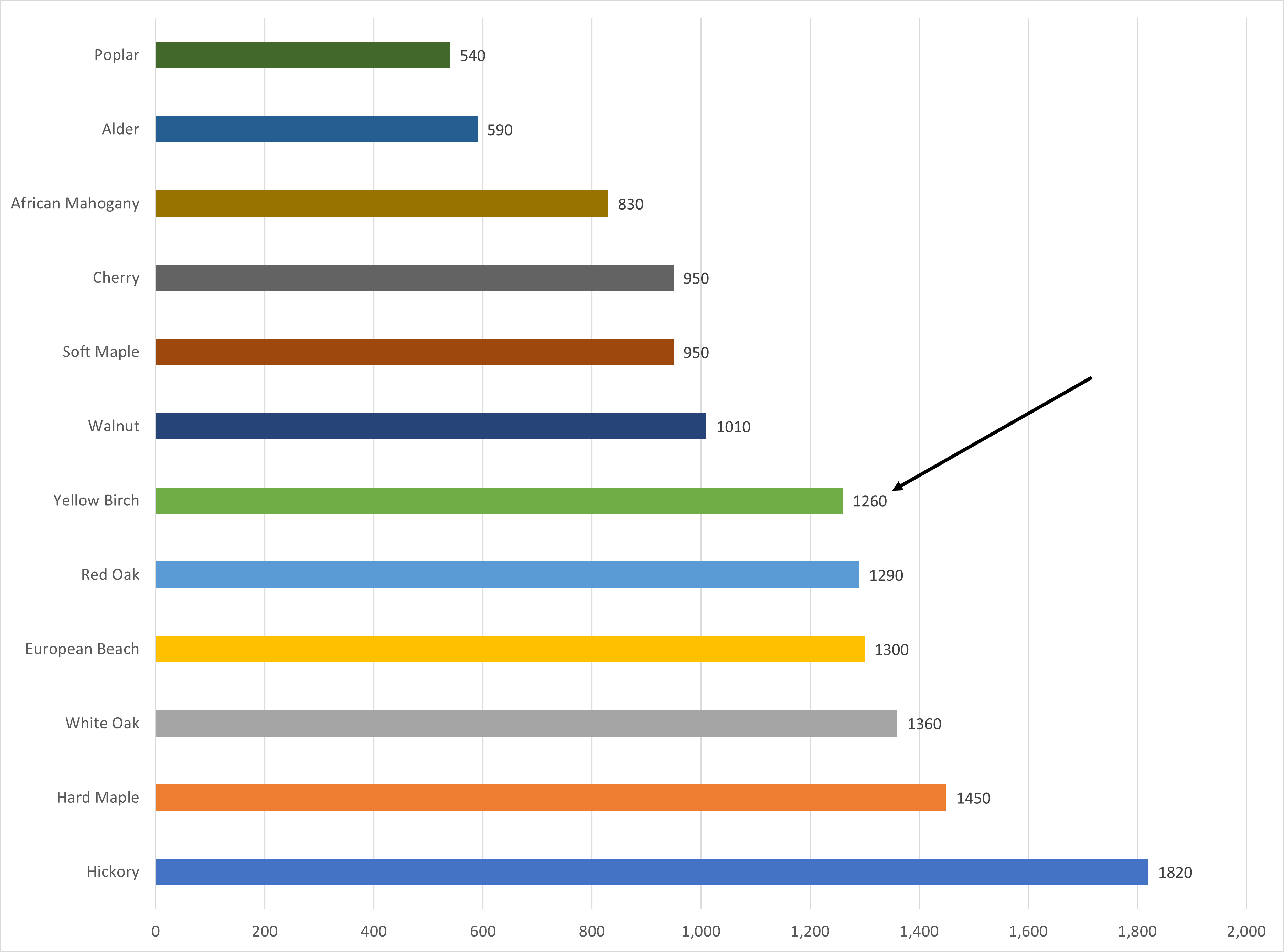
Yellow birch has a Janka hardness rating of about 1,260 lbf, making it significantly harder than soft maple, which typically rates around 950 lbf. Structurally, yellow birch is strong enough for furniture and high-traffic flooring, similar to soft maple, which is valued for its moderate strength and versatility.
Appearance & Workability
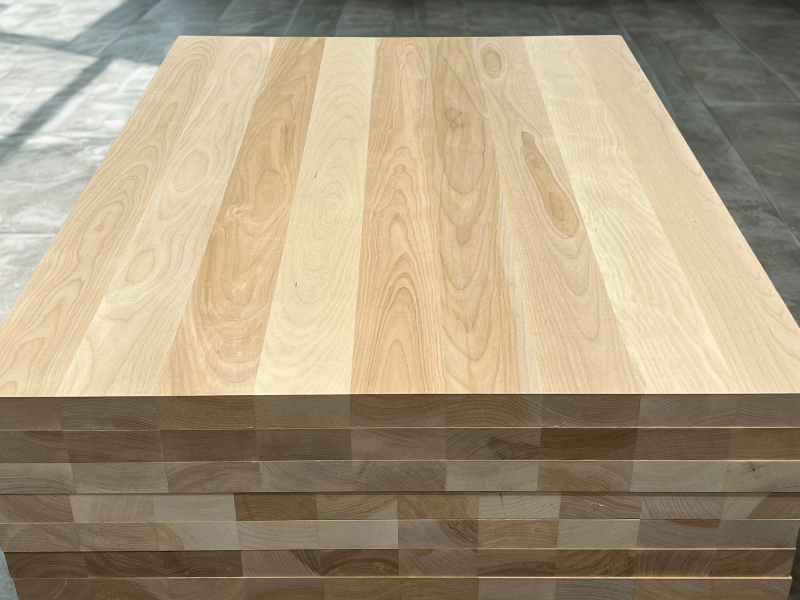
Visually, yellow birch ranges from pale yellow to golden hues, with a more complex grain than soft maple. It is highly appreciated for its staining qualities, particularly when a dark stain is intended for the finish. It’s also notably easier to work with around machinery, making it attractive for mass manufacturing. In cabinetry, while maple is prized for its smooth, consistent finish, birch stands out as a reliable, slightly more textured alternative that hides scratches better.
Cost Effectiveness & Market Price Fluctuation
The key reason driving the swap today is price competitiveness and stability in favour of yellow birch. The soft maple market has historically been prone to higher volatility due to fluctuating supply and demand. Birch, meanwhile, remains a medium-priced option, consistently cheaper than maple and less volatile in price, making it more attractive to budget-conscious operations.
Your Smooth Transition to Yellow Birch Starts with Champeau
For over a century, our sawmill has been dedicated to delivering premium wood components, specializing in FSC-certified yellow birch to meet the evolving needs of our customers. The commitment to sustainability is reflected in our certification, which aligns us with industry standards and meets growing market demand for responsibly sourced wood.
Our product array covers every stage of lumber production, including both green and kiln-dried options. We proudly offer custom grades and a wide assortment of components: dowels, squares, dimensional stock, panels, glued-up components, rips, and special profiles. These value-added operations ensure our clients receive exactly what their projects require, whether for fine furniture, construction, or bespoke manufacturing.
We have developed an extensive portfolio of yellow birch offerings, shaped by a focus on complementarity and diversification across market segments. This unique approach enables us to consistently provide some of the most competitively priced solutions on the market, tailored to satisfy even the most specific customer requirements.
We are the only company in North America with a secondary facility, in addition to our main plant, solely dedicated to producing yellow birch components. This enables us to offer innovative, customized solutions that deliver unmatched quality and flexibility, driving success for our clients’ projects.
Yellow Birch, a practical choice
Given comparable durability, more forgiving price points, and added functional and appearance benefits, yellow birch is not just a viable replacement; it’s a strategic upgrade in today’s volatile lumber market.